CALIGAE
3/13/11
Click here for patterns
*Home*Handbook Intro*Tunic*Caligae*Cloak*Belt*Helmets*Segmentata*Hamata*Squamata*Subarmalis*Scutum*Gladius*
*Pilum*Pugio*Packs*Mess Gear*Tools*Crests*Drill*Leatherworking*Armoring*
----------
Construction involves a
lot of
careful cutting but is otherwise straightforward. The upper is
cut
from a single piece of c. 8-ounce leather, well-oiled (with
neatsfoot
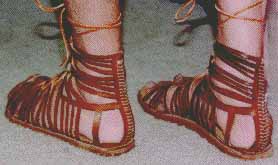
oil) to prevent decay. Cutting away the slots in each tab and the
spaces between them actually removes most of the leather. On a
good caliga there should be more space than leather, making it seem
very open. Since the leather is quite thick, strength should not
be a problem, and in fact, leaving too much leather can make it less
flexible and prone to chafing.
The sole is one-half to
three-quarters
inch
thick and is made of two or more layers (8-ounce or heavier), with
the
upper sandwiched between the top two. The layers are held
together
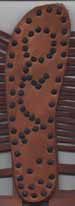
with hobnails, driven in from the bottom and the shanks clenched to
hold them permanently. Cover the clenched points
with
an additional insole of leather, felt, or sheepskin, securing it in
place
with a few stitches. The heel is sewn
with a butted seam, using edge-grain stitches.
Some hobnails are easily
hammered in with the shoe laying bottom-up on an anvil or flat piece of
steel, so that the shanks simply bend neatly as they are driven into
place and hit the steel. However, hammering on a conical nail can
flatten it, so it may be necessary to use a variation on the riveting
tool. Use an awl to poke the hole for the each nail, push it into
place, set the nailhead into a conical hole in a suitably heavy piece
of metal, and then clench the tip of the shank over the leather with a
hammer.

The tabs or straps are made long enough to meet in the middle and turn upwards, reaching another half to three-quarters of an inch. The slits should end just short of the point where the tabs turn upwards.
The caligae at bottom right are sewn up the back with a butted seam, though other methods are also acceptable.
See also the footwear at the bottom of the Civilian Clothing page, and Socks on the Cold Weather Clothing page.